
Aerial work
Helicopter water sampling
Efficient water sampling in lakes and hard-to-access areas.
Overview
Many lakes – one mission
When large volumes of water samples need to be collected within a limited time, a helicopter is often the most efficient solution. By combining flying with sampling, hundreds of lakes can be visited in the same mission – even where ground access is limited.
Arlanda Helicopter carries out water sampling missions in cooperation with clients and accredited samplers. The method makes it possible to collect samples from many lakes within the same geographic area under comparable conditions, creating valuable data for environmental monitoring and further analysis.
Method
How the water sampling works
Before each mission we receive a list of lakes to be sampled along with coordinates for each sampling point. We then plan the most efficient flight route to minimise flight time and maximise the number of lakes visited.
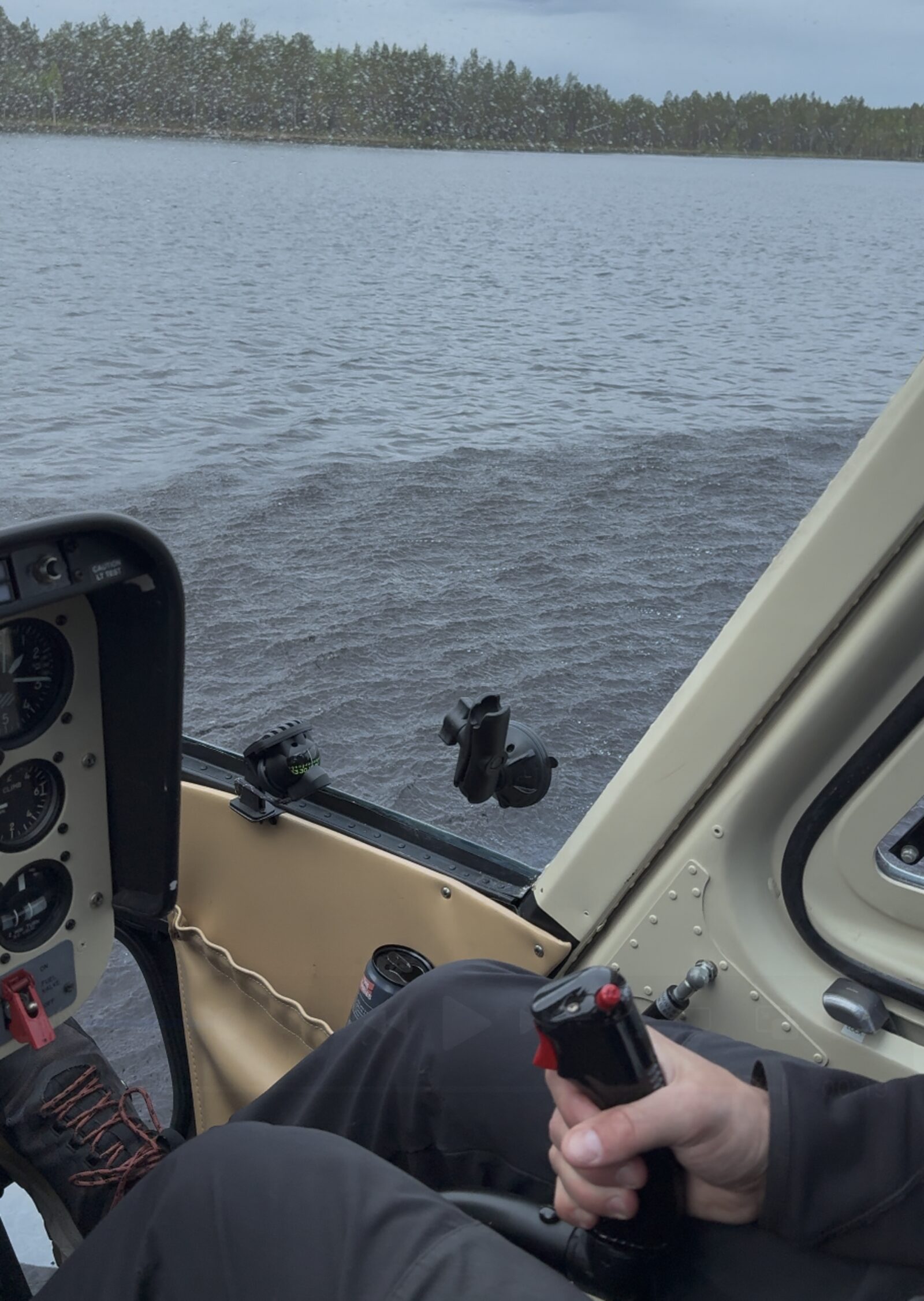
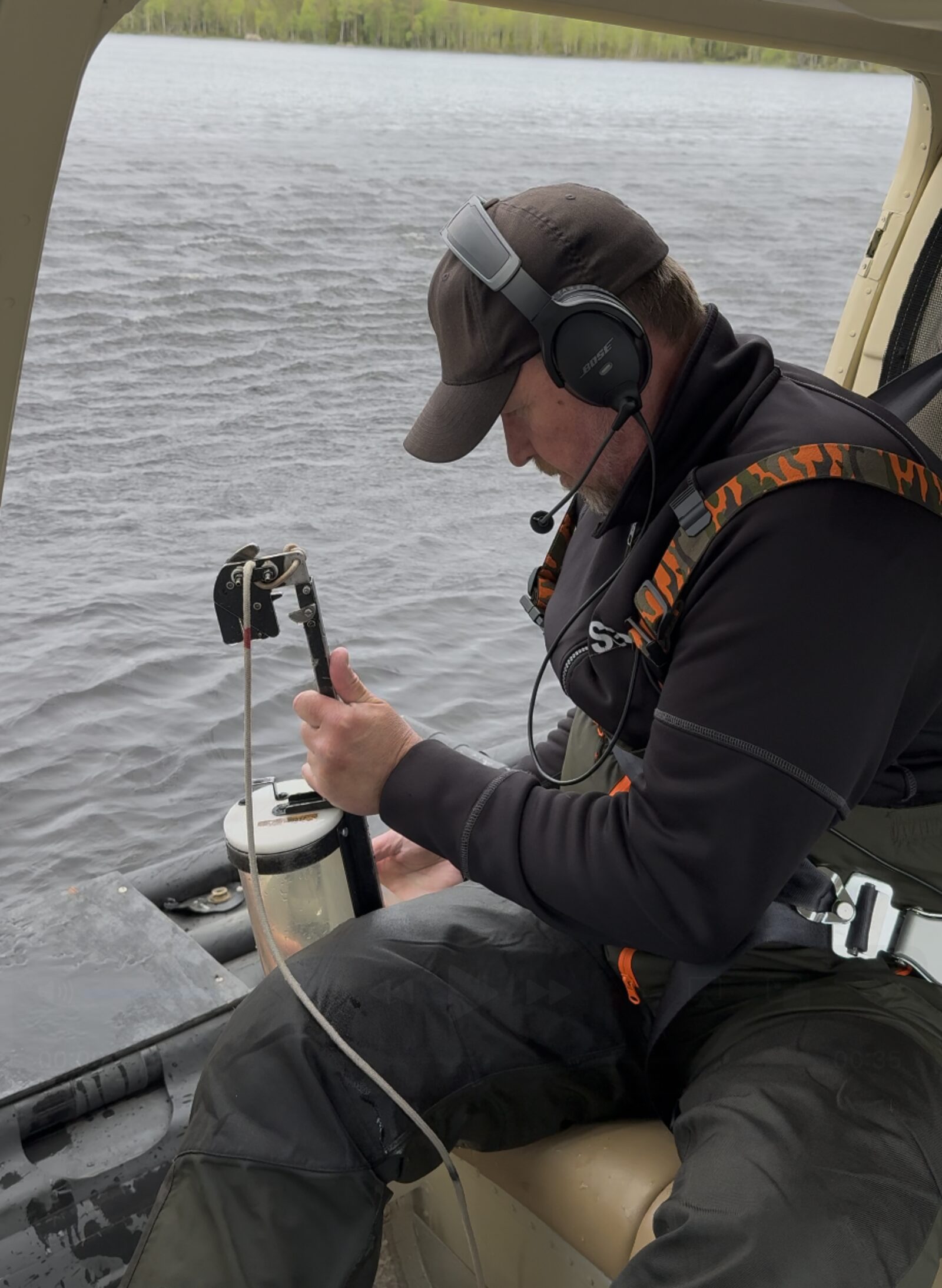
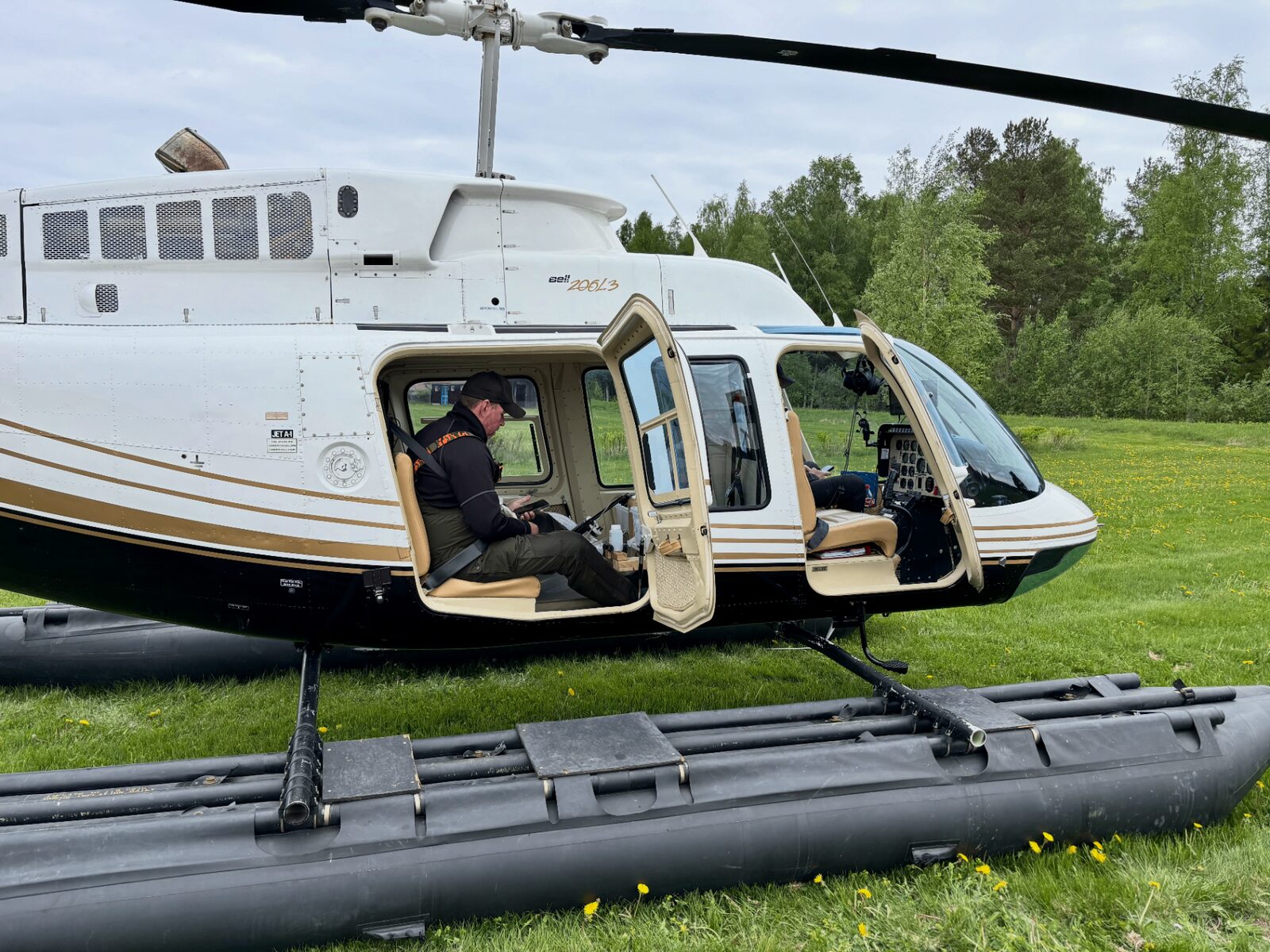
The helicopter is equipped with fixed floats approved for water landings. At each sampling point we land at the specified position, where the accredited sampler carries out the actual sampling.
Which samples are taken varies depending on the mission's purpose. It can range from simple surface samples to sampling at specific depths and complementary measurements such as temperature or Secchi depth.
Advantages
Why a helicopter is used for water sampling
The main advantage of the helicopter is that many lakes can be sampled within the same time period. This is especially important when samples from different lakes need to be compared without being influenced by changes over several days or weeks.
Many lakes are also far from roads and settlements. Reaching the same number of sampling points by boat or ground transport would in many cases be both time-consuming and costly. With a helicopter, lakes in roadless areas can be reached quickly and efficiently.
Helicopter
The right helicopter for the mission
Water sampling is carried out with the Bell 206L LongRanger, a helicopter type well suited to this kind of operation thanks to its range, reliability and load capacity.
Despite the fixed floats, the helicopter maintains an efficient cruise speed between sampling points, making it possible to visit a large number of lakes in the same mission.
Safety
Safe water landings
Landing on water differs from a traditional ground landing. The water surface offers an even landing area but also demands precise control of the helicopter's position throughout the sampling operation.
The pilot continuously manages wind, waves and other conditions to keep the helicopter stable at the desired spot. Before landing, conditions on site are also assessed to make sure the water area is suitable for the operation.
Environmental work
Key input for environmental work
The results of the water samples are used as decision support in environmental monitoring and management. Data from the sampling can underpin actions such as lake liming and follow-up of water quality over time.
By combining helicopter transport with efficient sampling, large areas can be monitored quickly and resource-efficiently.
FAQ
Frequently asked questions
A helicopter makes it possible to reach many lakes on the same day, even in areas with no roads or limited access. The method saves time and lets samples be collected under comparable conditions.
The sampling itself is done by an accredited sampler. Arlanda Helicopter handles the flight and transport between sampling points.
It varies with distance, the scope of sampling and weather. On larger missions a very large number of lakes can be visited during the same flight period.
Every lake is assessed individually based on size, surroundings, weather and other operational factors. Safety is always decisive for whether a water landing is possible.
It depends on the client's needs. Common examples are surface samples, sampling at specific depths and complementary measurements such as temperature and Secchi depth.
Yes. The flights are carried out within special operational activity and in compliance with current regulations and permits from the Swedish Transport Agency.